 Back to home
Last updated Nov 26 2025
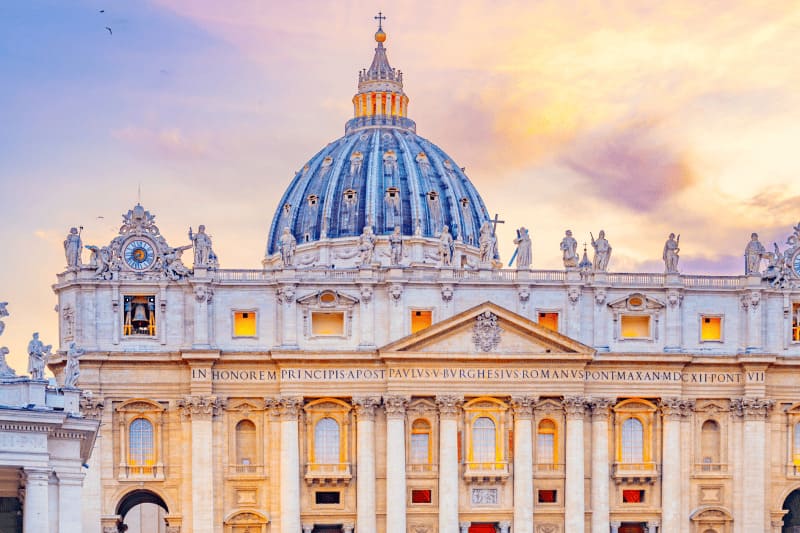
Experience the spiritual and artistic heart of the Vatican in 60 minutes. This guide focuses on the 10 essential masterpieces, from the Laocoön to the Sistine Chapel, avoiding the crowds and confusion of the vast galleries.
Planning your Vatican Museums visit?
Your simple audio guide to the 10 must-see masterpieces
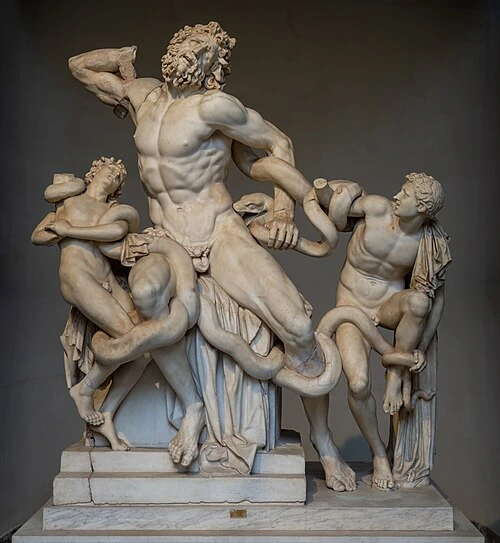
Agesander, Athenodoros & Polydoros (ancient)
This ancient marble masterpiece (discovered 1506) captures the terrifying moment a Trojan priest and his sons are crushed by sea serpents. The writhing bodies and agony on Laocoön's face revolutionized Renaissance art, teaching Michelangelo that stone could express human suffering. It stands as the ultimate example of technical virtuosity and emotional power in classical sculpture.
Listen to our audio tour sample
Enjoying the preview?
Free Audio Tour
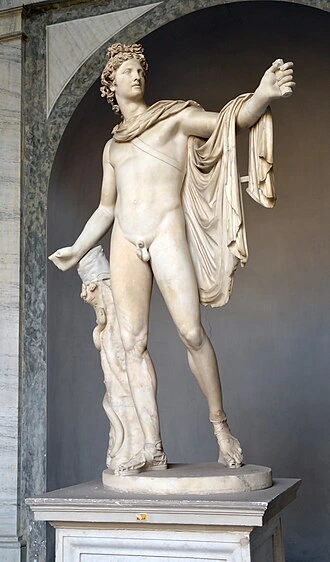
Roman copy after Leochares (ancient)
For centuries, this was considered the most perfect artwork in the world. The sun god Apollo has just released an arrow, his body captured in a relaxed yet powerful stance. The idealized proportions and calm expression defined male beauty for generations of artists. It represents the Greek ideal of "noble simplicity and quiet grandeur."
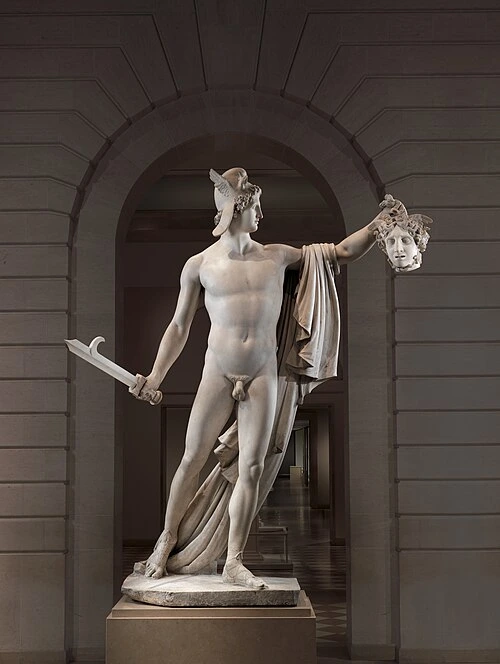
Antonio Canova
Canova's 1801 masterpiece is a modern answer to the ancient Apollo nearby. Perseus stands calmly holding Medusa's severed head, his body smooth and idealized. Unlike the violent energy of the Baroque, this Neoclassical work emphasizes balance, grace, and intellectual beauty. It turned Canova into the most famous sculptor of his time.
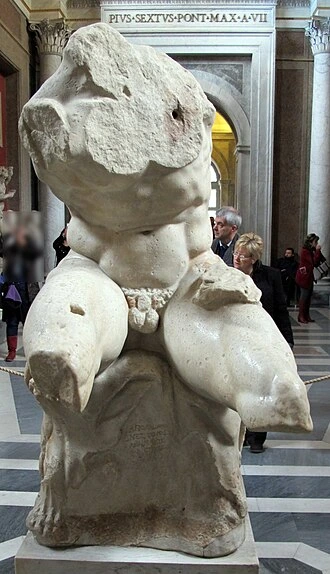
Apollonius of Athens (signed)
This fragmented muscle-bound torso (1st century BCE) mesmerized Michelangelo, who called himself its "pupil." Despite missing head and limbs, the twisting body conveys immense tension and power. It proved that a fragment could be a complete work of art, influencing everything from the Sistine Chapel figures to Rodin's modern sculptures.
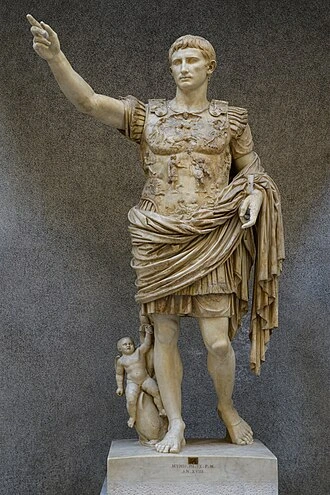
Roman imperial portrait
The first Roman Emperor stands in an eternal pose of command. This propaganda piece combines realistic portraiture with divine symbolism—Cupid at his feet claims he is descended from Venus. His breastplate illustrates diplomatic victories, marking a Golden Age of peace. It's the most famous image of Roman imperial power ever created.
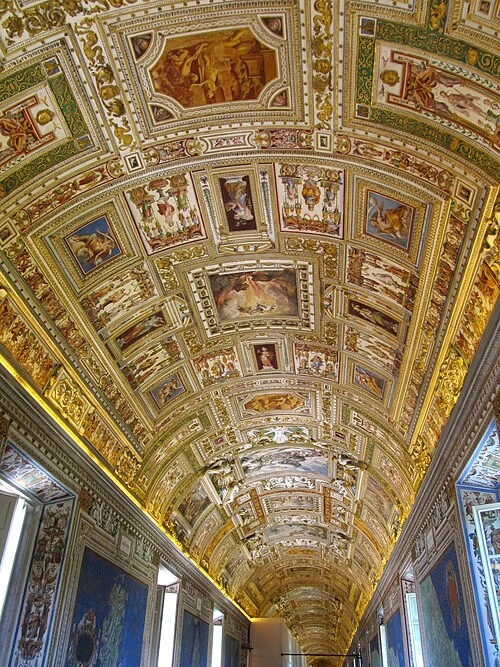
Ignazio Danti et al.
A 120-meter corridor where geography becomes gold-drenched art. Painted in the 1580s, these massive frescoes depict Italy's regions with surprising accuracy. Walking through it feels like flying over the peninsula. The radiant ceiling and detailed blue maps were designed to show the spiritual and temporal unity of the Church's lands.
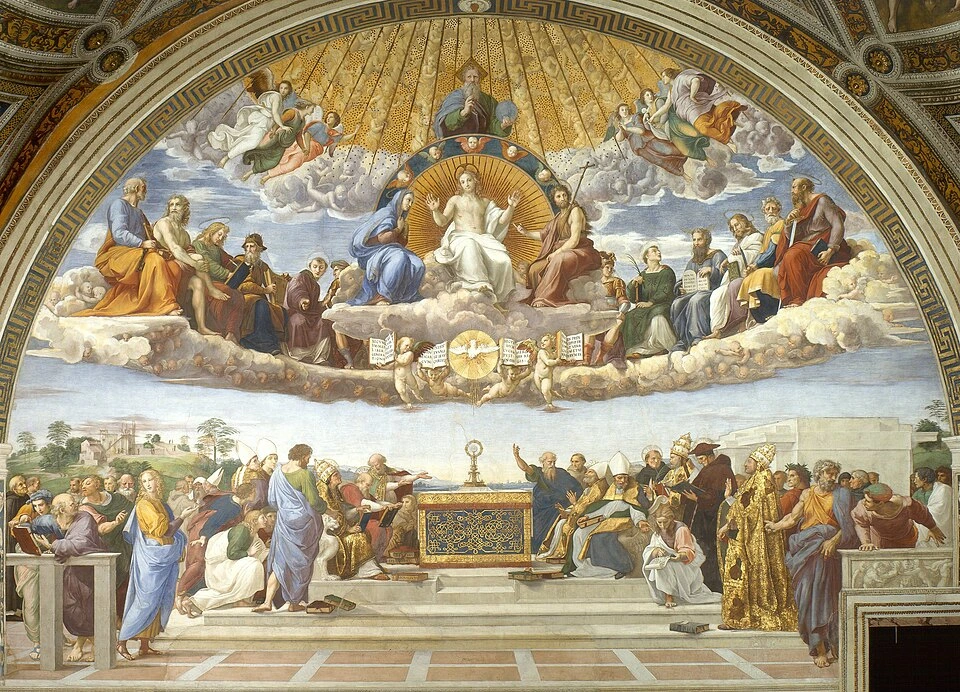
Raphael
Raphael's ode to theology unifies heaven and earth in a perfect circle. On earth, theologians debate; in heaven, the Trinity presides. Painted in 1509, it demonstrates the High Renaissance ideal of clarity and balance. Raphael turns complex dogma into a visual harmony, where every figure and gesture leads the eye to the central mystery of faith.
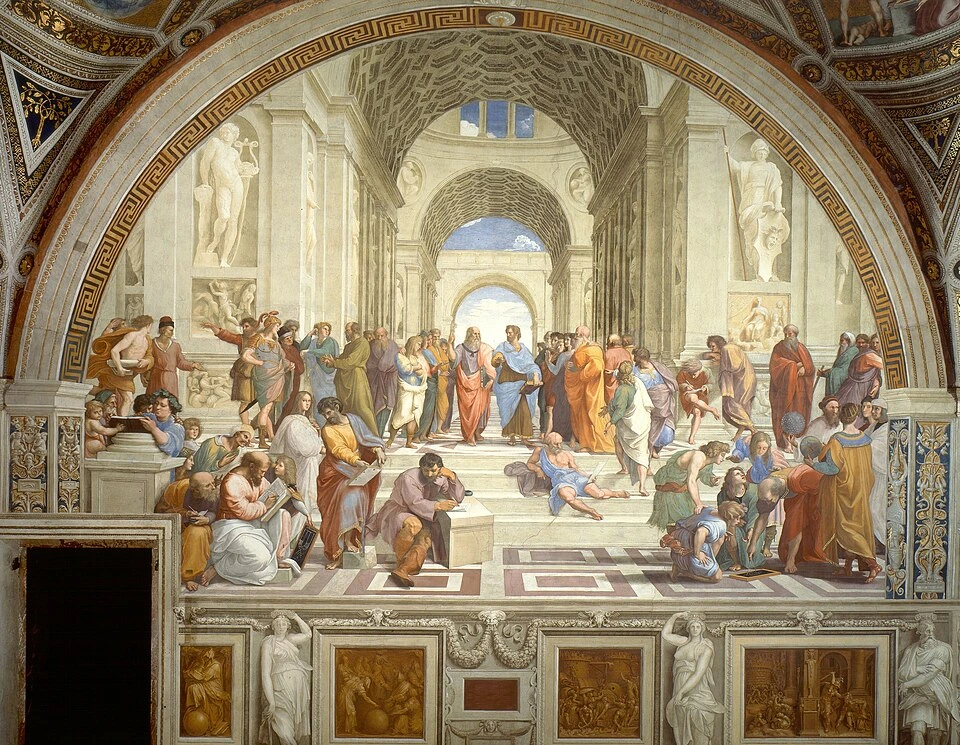
Raphael
The ultimate image of the Renaissance. Plato and Aristotle walk forward, discussing philosophy in a grand classical temple. Raphael gathers the greatest minds of antiquity—often using his contemporaries' faces (including Michelangelo and Leonardo)—to celebrate human reason. It's a masterpiece of perspective, creating a space where ancient wisdom and modern thought meet.
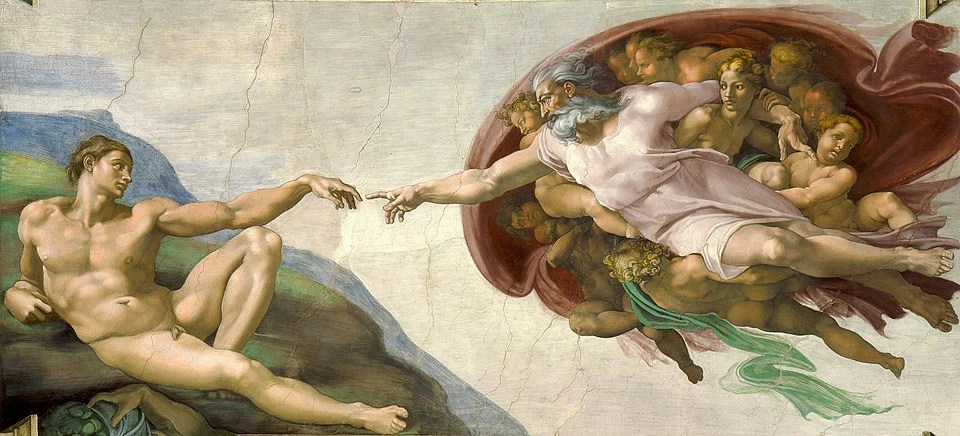
Michelangelo
The spark of life captured in two fingers. On the Sistine ceiling (1512), God reaches out to awaken Adam. The gap between their hands charges the empty space with infinite potential. It is the most iconic gesture in Western art, symbolizing not just physical creation, but the transmission of divine intellect and soul to humanity.
"Discover the secrets behind Creation of Adam and other masterpieces."
Free Audio Tour
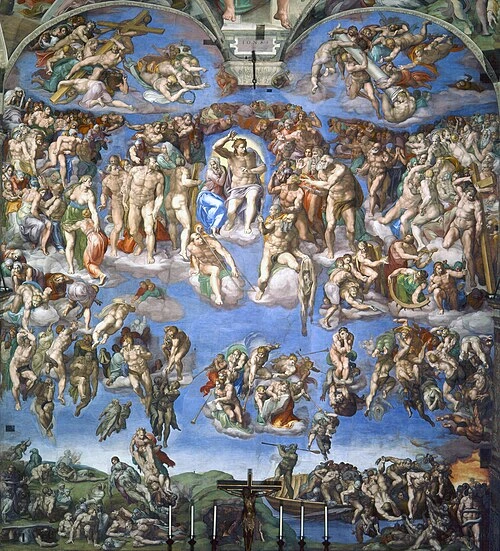
Michelangelo
Thirty years after the ceiling, Michelangelo returned to paint the end of the world (1541). A swirling vortex of 300 figures surrounds a powerful, terrifying Christ. There is no perspective, only a wall of blue crowded with rising souls and falling damned. It's a chaotic, emotional masterpieces of the Mannerist style, reflecting a turbulent era.
Want audio tours that actually make sense? We focus on the masterpieces that matter and tell you the stories behind them - no art history degree required.
This guide is written by Museums Made Easy, creators of museum audio tours for real visitors.
This guide is part of our museum highlight guides.
Browse all museum highlights →