 Back to home
Last updated Dec 4 2025
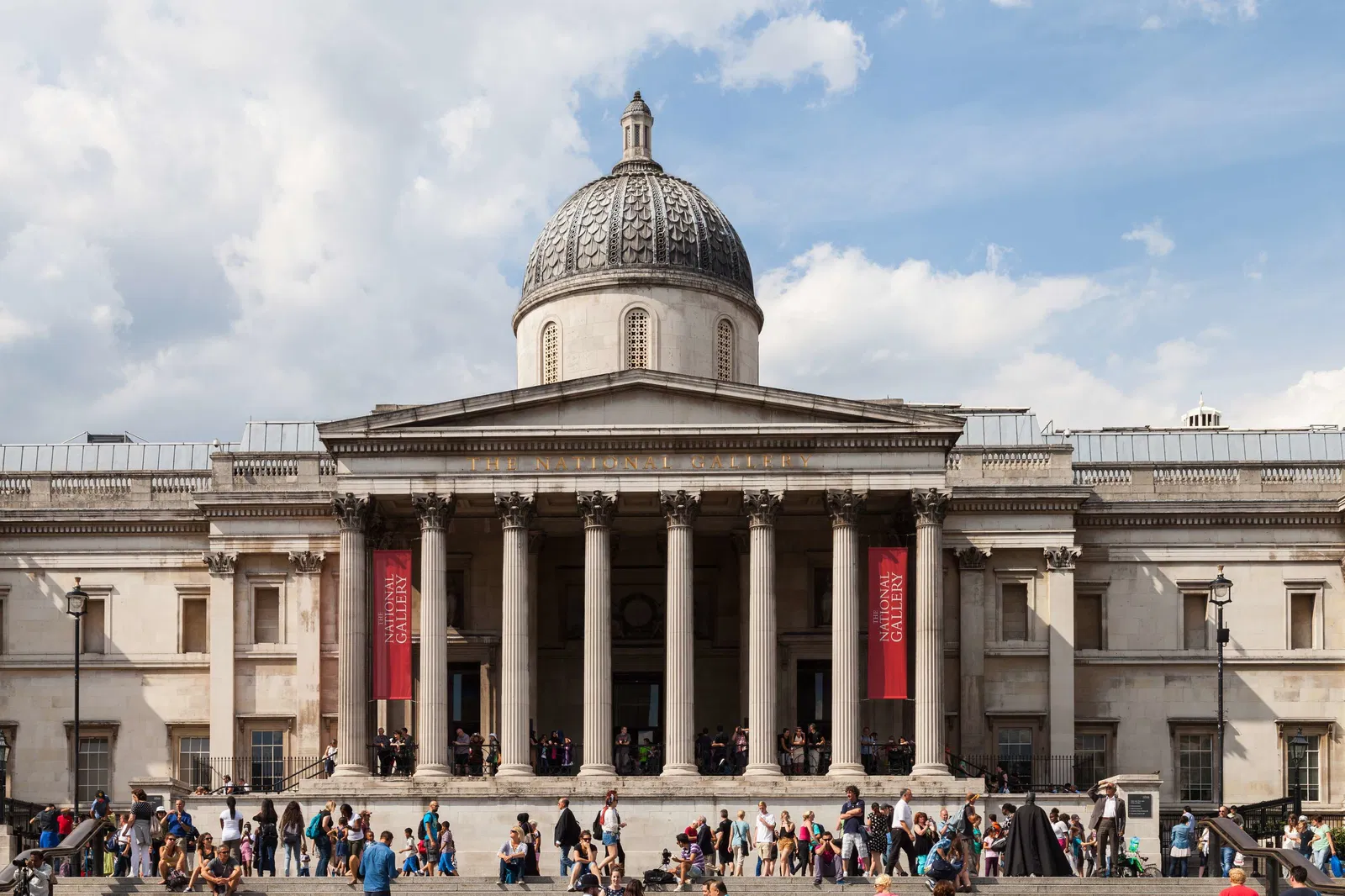
Discover 700 years of art history in 60 minutes. This guide extracts the absolute essential masterpieces from the National Gallery's vast collection. From the secrets of the Arnolfini Portrait to the radiance of Van Gogh's Sunflowers, experience the paintings that defined Western art.
Planning your The National Gallery visit?
Your simple audio guide to the 10 must-see masterpieces
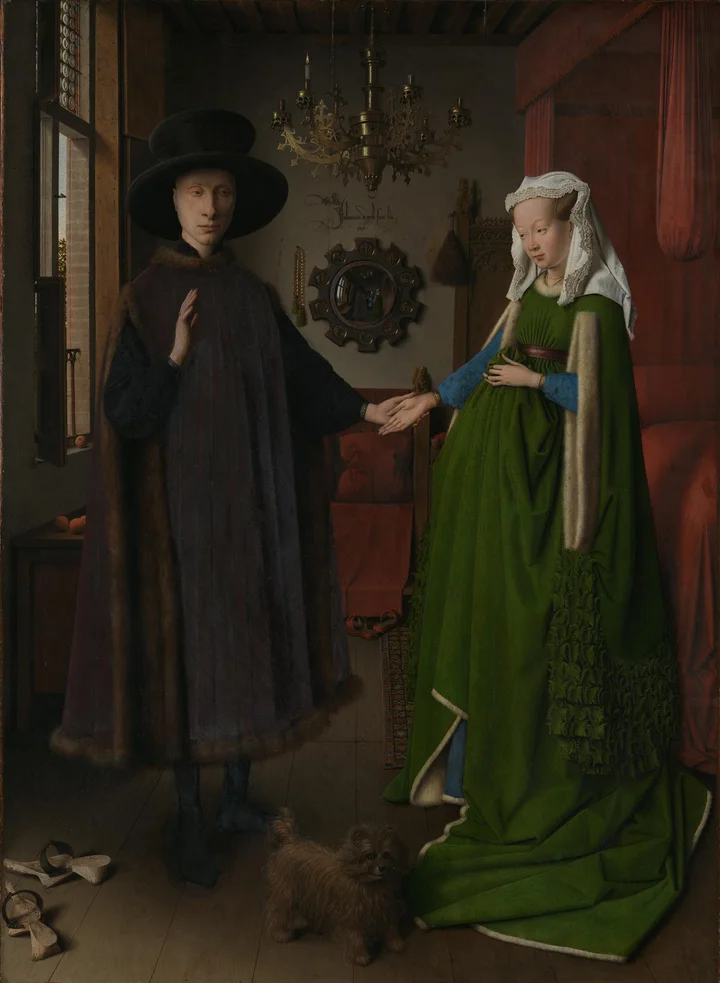
Jan van Eyck
This 1434 masterpiece is a miracle of oil painting. Van Eyck captures every texture—fur, brass, glass—with microscopic detail. The convex mirror reflects the entire room and two witnesses, while the single candle and dog symbolize faith and fidelity. complexity. It remains one of art history’s most analyzed and debated images.
Listen to our audio tour sample
Enjoying the preview?
Free Audio Tour
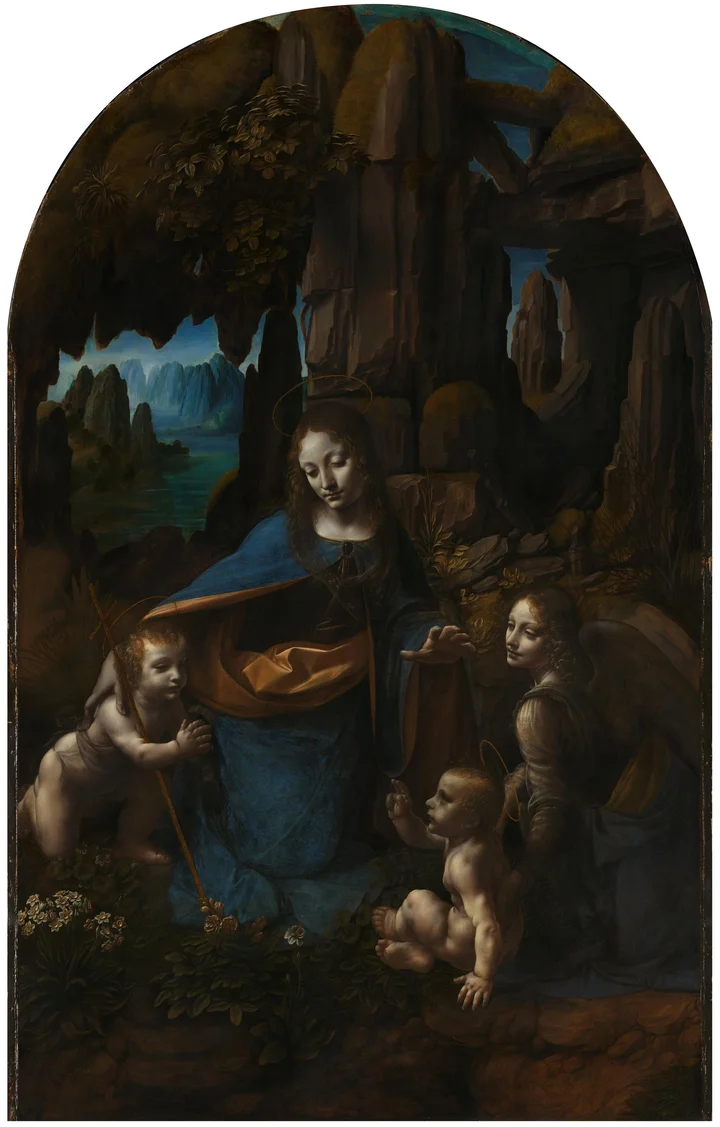
Leonardo da Vinci
Leonardo’s mysterious vision (c. 1491-1508) places holy figures in a dark, fantastic grotto. He uses smoky shadows (sfumato) to soften outlines, creating a dreamlike atmosphere. The scientific precision of the geological formations reveals his dual genius as artist and scientist. It is a masterpiece of atmospheric perspective.
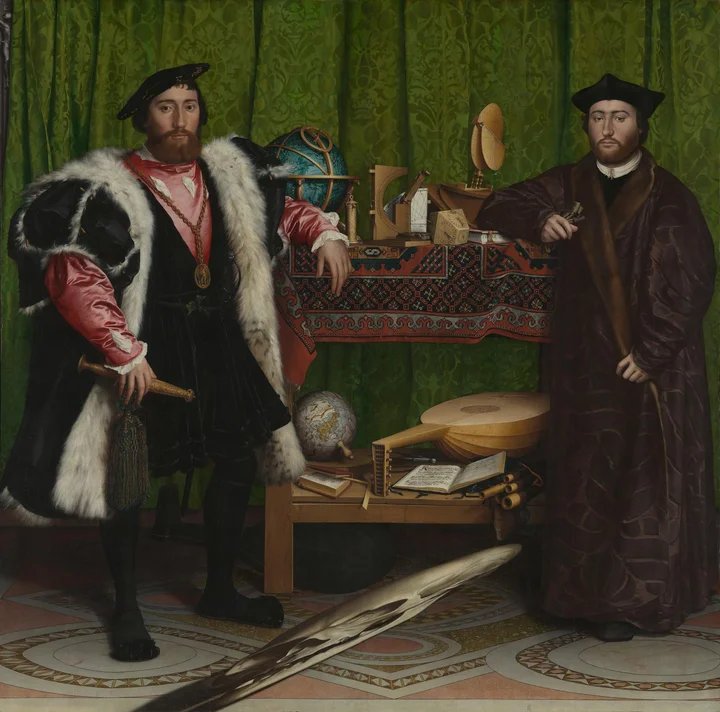
Hans Holbein the Younger
A portrait of power and mortality. Two wealthy diplomats stand amidst objects of learning, but a distorted shape slashes across the bottom. Viewed from the side, it resolves into a skull—a hidden "memento mori" reminding us that death haunts even the most successful lives.
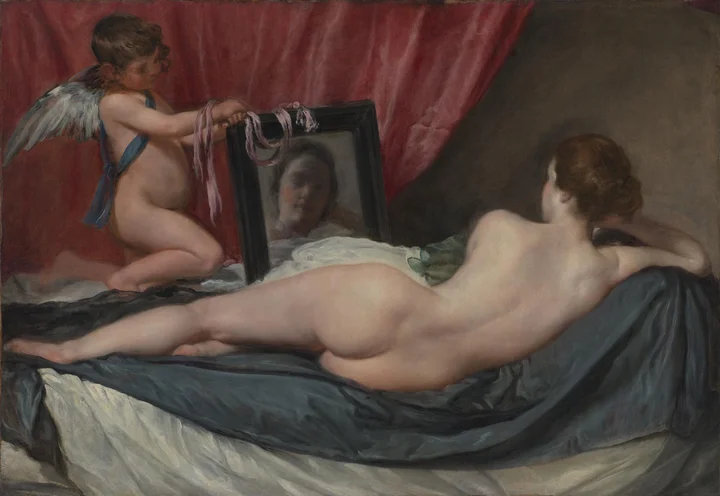
Diego Velázquez
Velázquez’s only surviving female nude (1647-51) was painted for a private collection, as such images were forbidden in Spain. Venus turns her back to us, her face visible only as a blur in the mirror held by Cupid. It explores the nature of looking and desire with lush, loose brushwork.
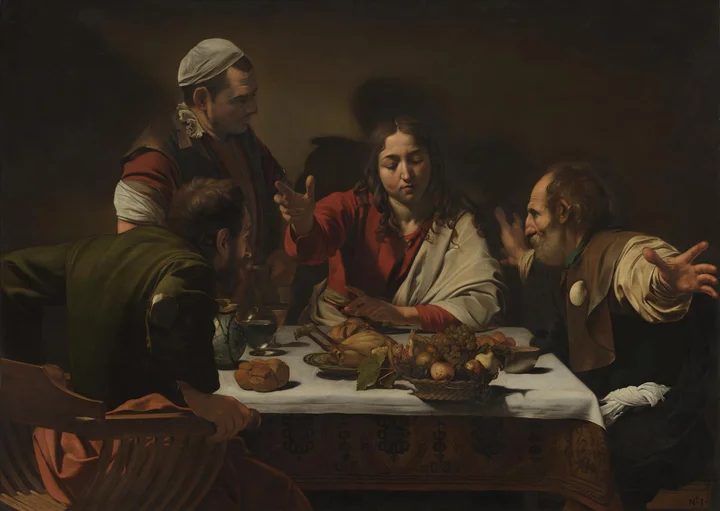
Caravaggio
Caravaggio brings spiritual drama down to earth. Painted in 1601, it captures the shock of disciples recognizing the risen Christ. The theatrical lighting and ordinary details—a torn sleeve, a basket teetering on the edge—make the divine moment feel intensely, forcefully real.
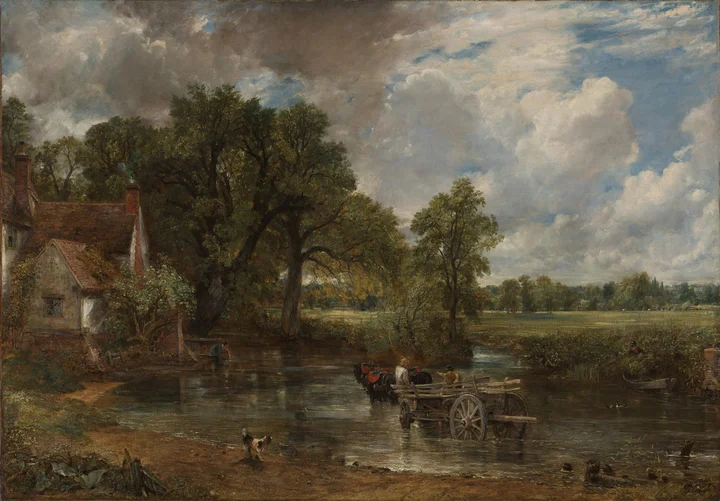
John Constable
Constable’s 1821 landscape changed art by finding majesty in a simple English farm scene. He refused to idealize, painting the clouds and changing weather with scientific accuracy. Its fresh naturalism stunned French artists and paved the way for Impressionism.
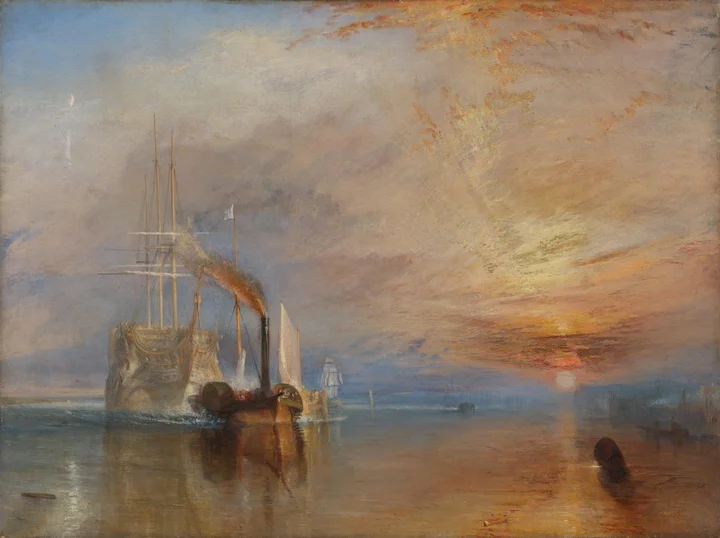
J. M. W. Turner
Britain’s favorite painting. A ghostly war hero of the age of sail is towed to its doom by a dark, modern steam tug. Turner sets the scene against a blazing sunset, creating a poignant elegy for a lost era. It dissolves form into pure light and color, anticipating modern abstraction.
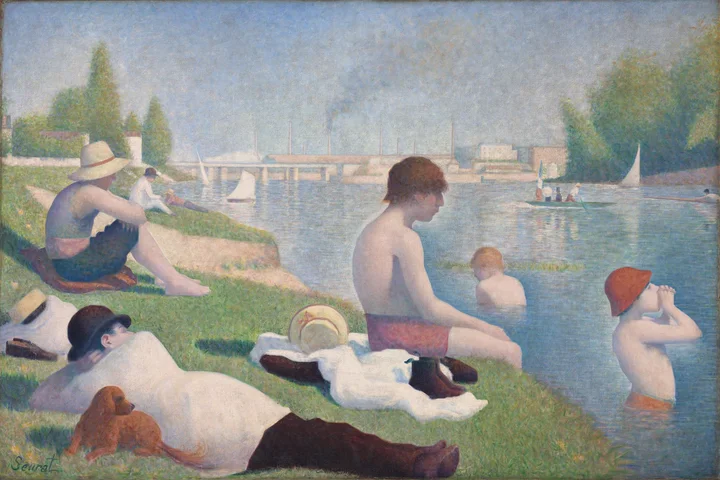
Georges Seurat
Seurat applied science to leisure in this monumental 1884 scene. Using precise dots of color (Pointillism), he froze working-class Parisians in a silent, shimmering haze. The factory smokestacks in the background hint at the modern industrial world these bathers are escaping.
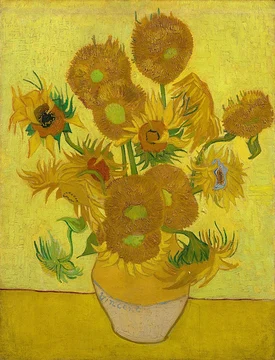
Vincent van Gogh
Van Gogh painted these radiating blooms (1888) as a welcome gift for Gauguin. Using thick impasto and varying yellows, he turned a simple still life into an explosion of emotion and vitality. They symbolize friendship, gratitude, and the life force itself.
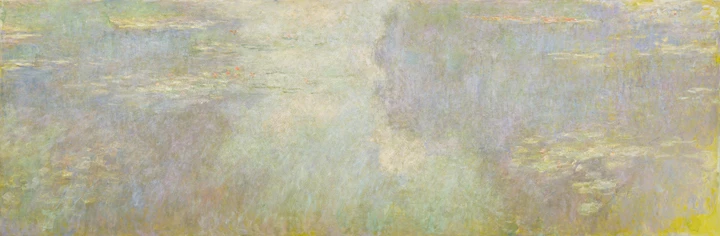
Claude Monet
In his final years, Monet immersed himself in his garden pond. This large canvas (post-1916) eliminates the horizon, plunging the viewer into a floating world of reflection and color. It is a meditation on nature that pushes Impressionism toward pure abstraction.
Want audio tours that actually make sense? We focus on the masterpieces that matter and tell you the stories behind them - no art history degree required.
This guide is written by Museums Made Easy, creators of museum audio tours for real visitors.
This guide is part of our museum highlight guides.
Browse all museum highlights →