 Back to home
Last updated Dec 4 2025
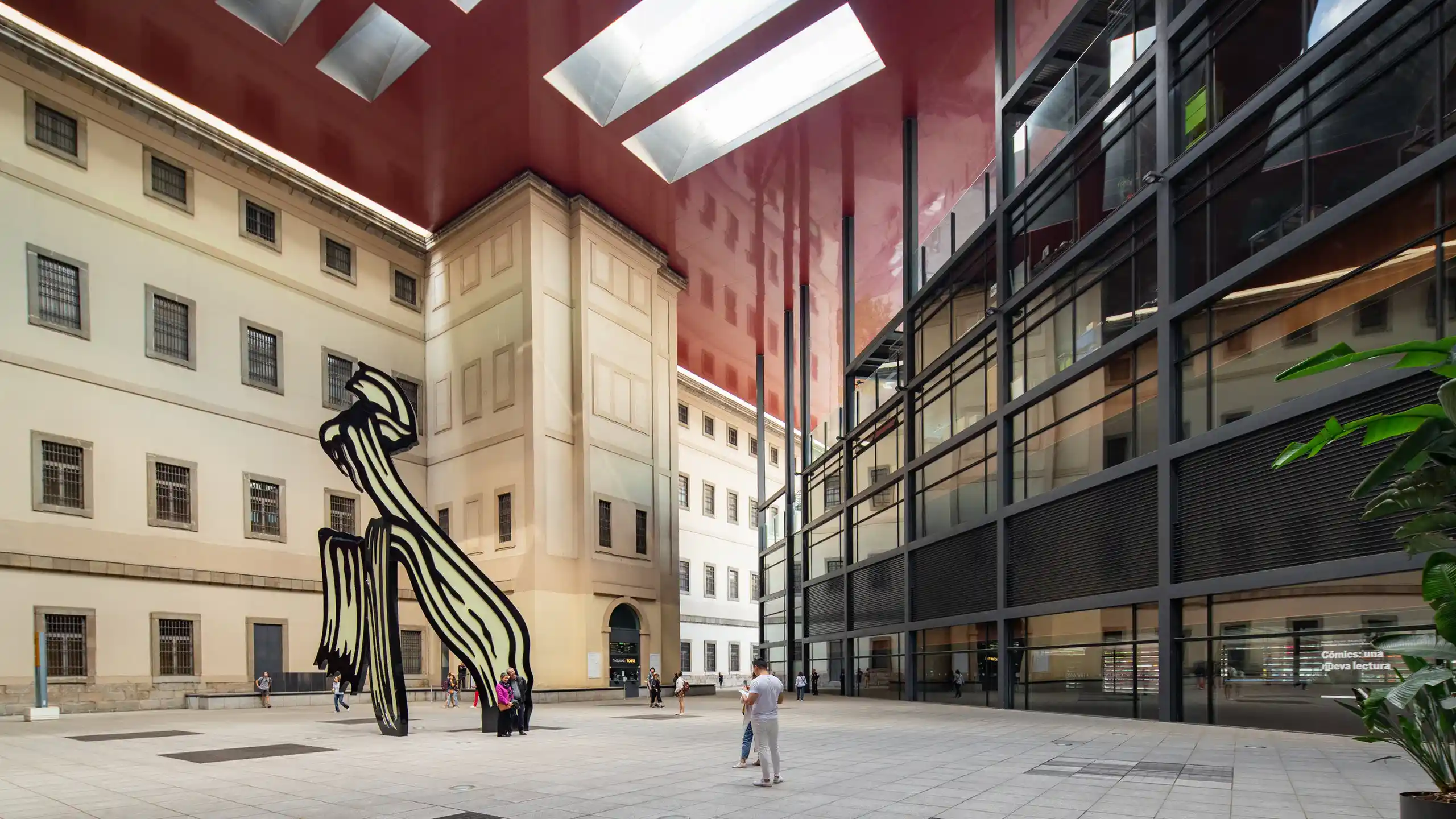
Experience the soul of Spanish modernism in 60 minutes. This guide explores the Reina Sofía’s essential masterpieces, from Picasso’s tragic "Guernica" to the dreamscapes of Dalí and Miró. Discover the revolutionary art that defined a tumultuous century.
Planning your Museo Reina Sofía visit?
Your simple audio guide to the 10 must-see masterpieces
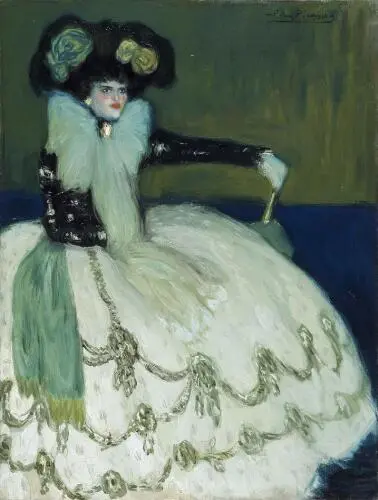
Pablo Picasso
Painted in 1901 during his Blue Period, this melancholic portrait captures profound isolation. A woman sits wrapped in cold blue tones, reflecting the 20-year-old Picasso’s grief over a friend’s death. It marks the beginning of his journey to becoming the 20th century’s most influential artist.
Listen to our audio tour sample
Enjoying the preview?
Free Audio Tour
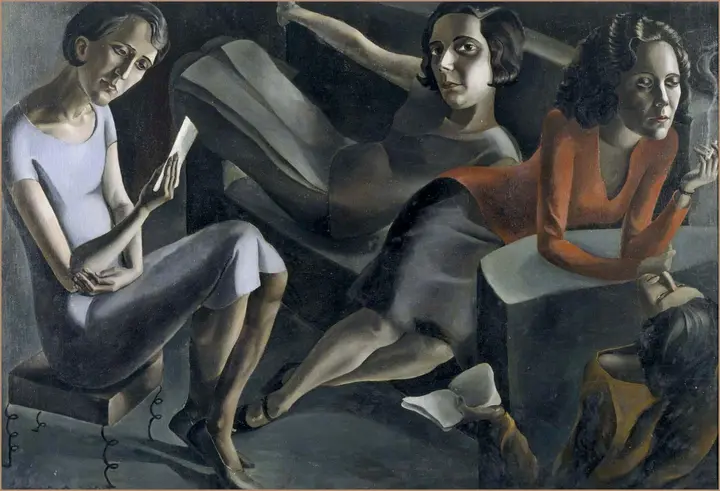
Ángeles Santos
A haunting masterpiece by 18-year-old prodigy Ángeles Santos (1929). Mysterious, ghost-like figures gather in a dreamlike space, suspended between reality and fantasy. This unsettling work captures the intellectual atmosphere of 1920s Spain with a unique, surrealist vision that stunned the art world.
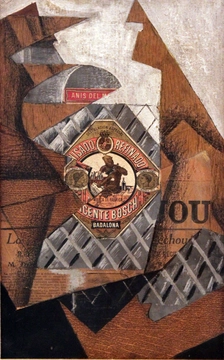
Juan Gris
Agrit’s 1914 Cubist work breaks reality into geometric planes with mathematical precision. An anis bottle, newspaper, and guitar are reassembled in a balanced composition. Unlike Picasso’s intuitive style, Gris treated Cubism as "flat, colored architecture," blending his Madrid roots with Parisian avant-garde discipline.
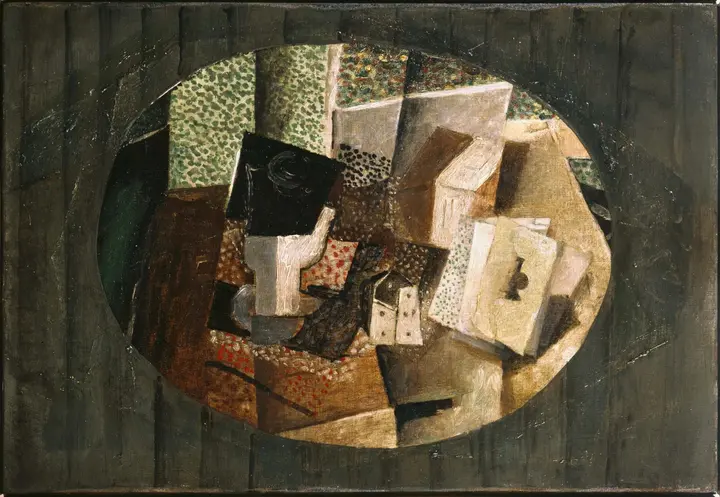
Georges Braque
A 1914 still life by the co-inventor of Cubism. Braque fragments a café scene—floating cards and dice—into overlapping planes of brown and gray. His analytical approach creates a complex sense of space, incorporating everyday objects to revolutionize how we perceive form on canvas.
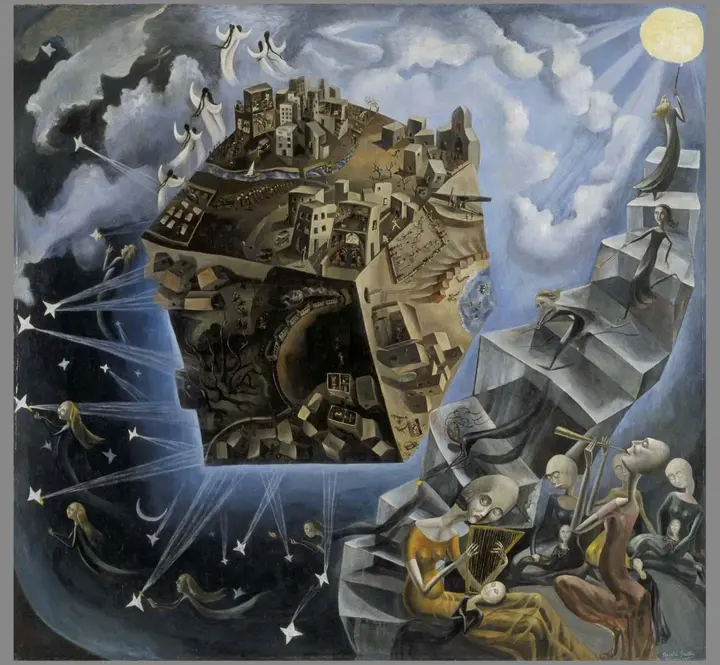
Ángeles Santos
This monumental 1929 canvas depicts a surreal, apocalyptic planet. Painted when Santos was just 18, it is filled with strange figures and desolate landscapes. Combining childlike directness with deep anxiety, it remains a visionary masterpiece of the Spanish avant-garde, predating many famous Surrealist themes.
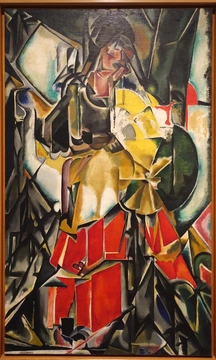
María Blanchard
Blanchard’s 1916 portrait humanizes Cubism. She fragments the woman’s form into geometric planes but retains emotion and warmth. A key figure in Paris, Blanchard overcame physical disability and prejudice to create a unique, lyrical style that bridges structural rigor with deep sensitivity.
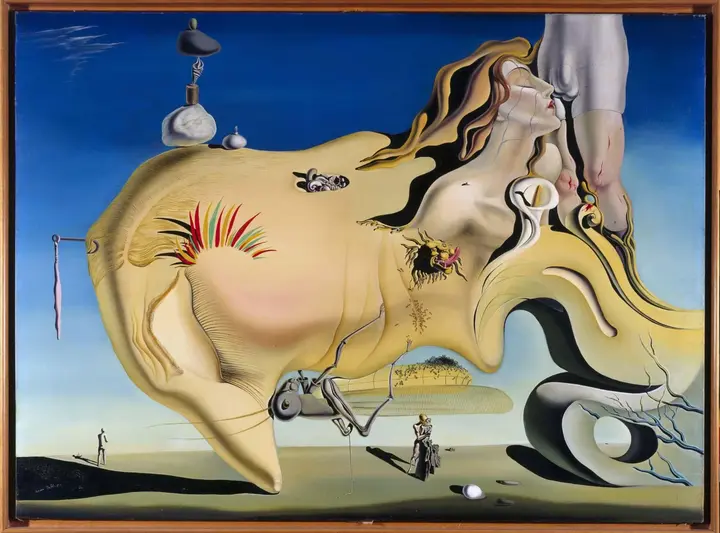
Salvador Dalí
Dalí’s 1929 Surrealist breakthrough. A melting, grotesque head—part self-portrait, part rock formation—is consumed by ants and irrational symbols. Painted during his affair with Gala, it is a disturbing, hallucinatory exploration of sexual anxiety and the unconscious, rendered with photographic precision.
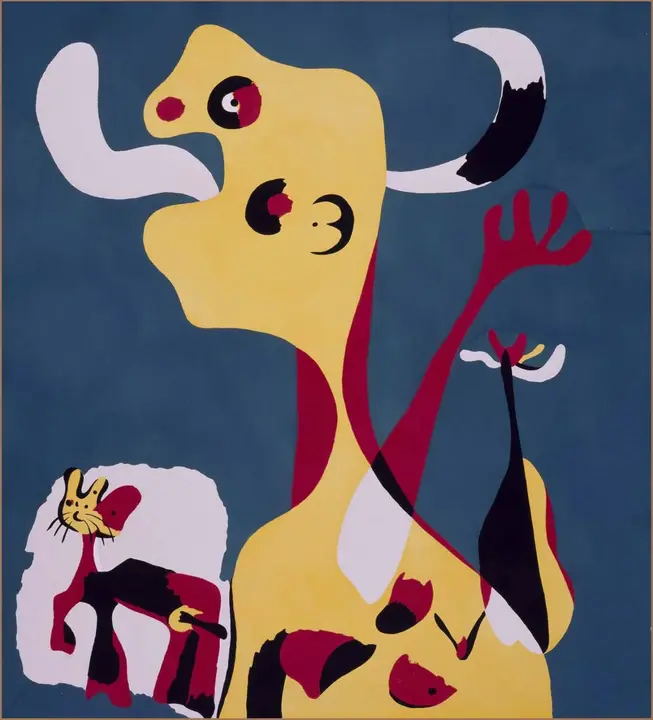
Joan Miró
Painted in 1936 as civil war loomed, this work features Miró’s poetic, biomorphic forms. A simplified woman and dog float against a dark void. Miró used this playful but profound language to transcend political turmoil, creating a universal, dreamlike universe vibrant with color.
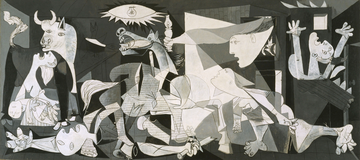
Pablo Picasso
The 20th century’s most powerful anti-war statement (1937). Picasso painted this massive monochrome canvas to protest the bombing of a Basque town. The screaming figures, dying horse, and shattered forms create a timeless, agonizing cry against the violence and suffering of war.
Want audio tours that actually make sense? We focus on the masterpieces that matter and tell you the stories behind them - no art history degree required.
This guide is written by Museums Made Easy, creators of museum audio tours for real visitors.
This guide is part of our museum highlight guides.
Browse all museum highlights →