Uffizi Gallery highlights
Back to home

Uffizi Gallery Highlights: 10 Must-See Masterpieces

Florence, Italy
90 minutes10 highlights

Last updated Dec 4 2025

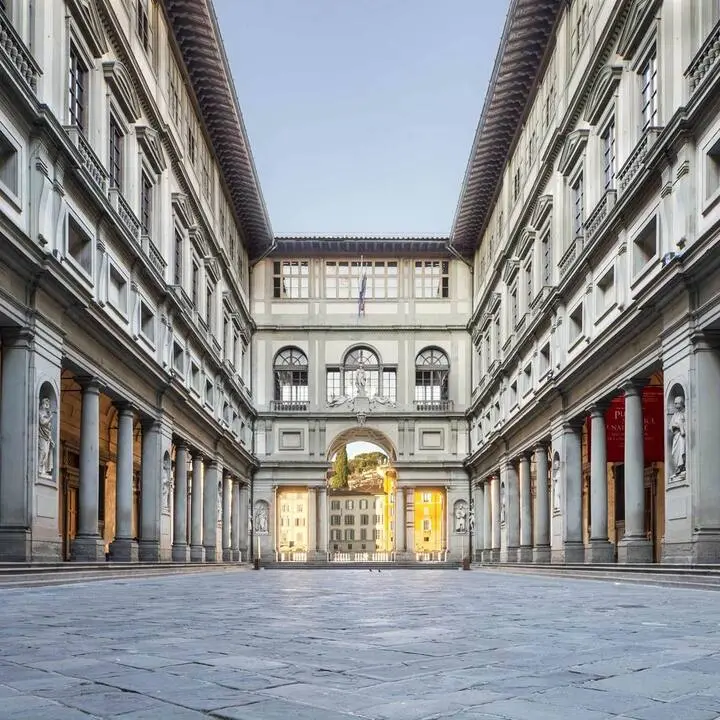
What to see at the Uffizi Gallery in just 90 minutes? These Uffizi highlights take you through the greatest Renaissance art collection in the world, from medieval innovations to Baroque drama. This self-guided audio tour covers ten must-see masterpieces including Botticelli's enchanting Birth of Venus and Primavera, Leonardo's early genius in the Annunciation, and Michelangelo's only panel painting. Each artwork is chosen for its revolutionary impact on Western art and its role in defining the Renaissance. Housed in a 16th-century palace designed by Vasari, the Uffizi follows art's evolution chronologically through its elegant corridors. Experience the birth of modern painting without feeling overwhelmed by the museum's 1,500-work collection spanning eight centuries.

Experience the Full Audio Tour - Free →

Plan Your Visit

The 10 Essential Masterpieces

Ognissanti Madonna (Maestà) by Giotto
1

Ognissanti Madonna (Maestà)

Giotto

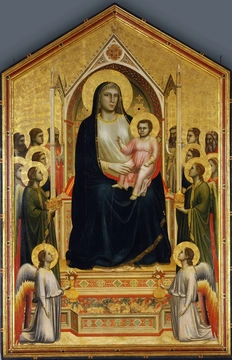
Painted around 1310, this monumental altarpiece shows Giotto revolutionizing medieval art by making the Madonna and Child appear solid and three-dimensional. Unlike the flat Byzantine style, Giotto's figures have weight, volume, and humanity. The Virgin sits on a realistic throne surrounded by angels and saints who occupy believable space. This naturalism marked the beginning of the Renaissance revolution in painting. Giotto's breakthrough influenced every artist who followed, from Masaccio to Michelangelo. The painting demonstrates why Dante praised Giotto for surpassing his teacher Cimabue and transforming the art of his age.

Second Floor, Room A4
Duke and Duchess of Urbino by Piero della Francesca
2

Duke and Duchess of Urbino

Piero della Francesca

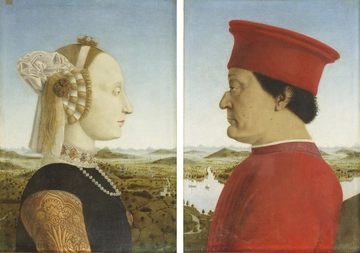
Painted around 1465-1472, this double portrait depicts Federico da Montefeltro and his wife Battista Sforza in strict profile like ancient Roman coins. Federico's broken nose (from a jousting accident) is prominently displayed, showing Renaissance realism. The detailed landscape behind them shows their domains in perfect perspective. On the reverse panels, allegorical triumphs celebrate their virtues. Piero was a mathematician as well as painter, and his mastery of geometry and light creates crystalline clarity. This portrait became the model for Italian Renaissance profile portraits and demonstrates humanism's revival of classical forms.

Second Floor, Room A9
Primavera (Spring) by Sandro Botticelli
3

Primavera (Spring)

Sandro Botticelli

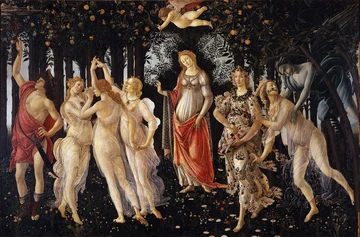
Painted around 1480 for the Medici family, this enchanting allegory depicts Venus presiding over an eternal spring garden. Over 500 plant species are identifiable in the meadow. Zephyr pursues the nymph Chloris who transforms into Flora, the Three Graces dance, and Mercury dispels clouds. The painting blends classical mythology with Neoplatonic philosophy popular in Medici Florence. Botticelli's flowing lines and poetic imagination create a dreamlike world. The painting's exact meaning has been debated for centuries, but its beauty is undeniable. It represents the pinnacle of Florentine Renaissance sophistication and refinement.

Second Floor, Room A11
The Birth of Venus by Sandro Botticelli
4

The Birth of Venus

Sandro Botticelli

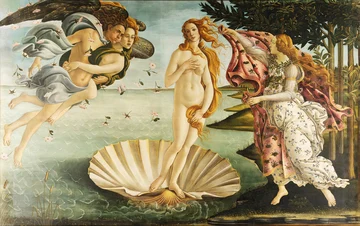
Painted around 1485, this is one of the most iconic images in Western art. Venus arrives on a shell blown by wind gods while a nymph rushes to clothe her. Botticelli revived the classical nude for Christian Florence, justifying it through Neoplatonic philosophy that saw Venus as representing divine love. The goddess's modest pose references ancient sculpture, while her elongated proportions create ethereal beauty. The painting was revolutionary – the first large-scale mythological nude since antiquity. Its graceful lines, delicate colors, and poetic vision embody Renaissance Florence at its most refined. The image has been reproduced countless times worldwide.

Second Floor, Room A12
Annunciation by Leonardo da Vinci
5

Annunciation

Leonardo da Vinci

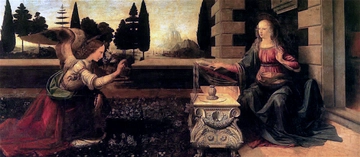
Painted around 1472-1475 when Leonardo was barely 20, this early work already shows his genius. The Angel Gabriel announces to Mary that she will bear Christ. Leonardo's mastery of atmospheric perspective makes the background landscape recede naturally. Every detail is observed from nature – the feathers on the angel's wings, the flowers in the grass, the drapery folds. The composition uses mathematical perspective to create believable space. Though youthful, the painting demonstrates Leonardo's lifelong concerns with light, nature, and the illusion of reality. It's a rare opportunity to see Leonardo's early development in Florence before his mature masterpieces.

Second Floor, Room A35
Doni Tondo (Holy Family) by Michelangelo
6

Doni Tondo (Holy Family)

Michelangelo

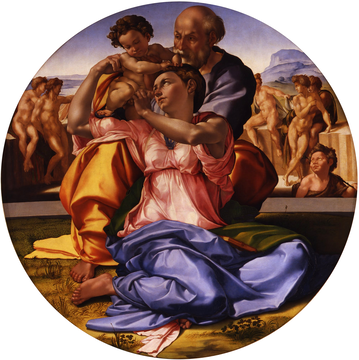
Painted around 1506 for the wealthy Doni family, this circular painting is Michelangelo's only finished panel painting. The Holy Family twists in a complex spiral composition showing Michelangelo's sculptural approach to painting. The brilliant, almost acidic colors and muscular figures shocked contemporaries but influenced Mannerist painters. Mary's contrapposto pose resembles sculpture, while the nude figures in the background reference classical and Christian themes. The frame, also designed by Michelangelo, is integral to the work. This painting bridges the High Renaissance and Mannerism, showing Michelangelo pushing beyond Leonardo and Raphael toward something more dynamic and strange.

Second Floor, Room A38
Madonna of the Goldfinch by Raphael
7

Madonna of the Goldfinch

Raphael

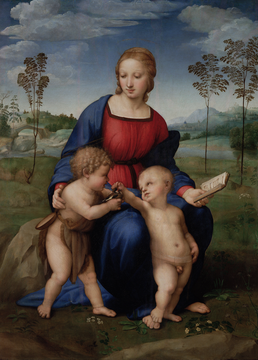
Painted around 1506, this tender scene shows the Virgin Mary with the infant Christ and John the Baptist in a serene landscape. The goldfinch Christ holds symbolizes his future Passion. Raphael achieves perfect balance between naturalism and idealization – the figures are human and warm yet possess classical beauty. The pyramidal composition creates stability while the gentle interactions convey maternal love. The painting was damaged in a building collapse in 1547 and painstakingly reconstructed. Raphael synthesized Leonardo's atmospheric effects with Michelangelo's sculptural forms, creating his own style of harmonious grace that defined High Renaissance ideals.

First Floor, Room C11
Venus of Urbino by Titian
8

Venus of Urbino

Titian

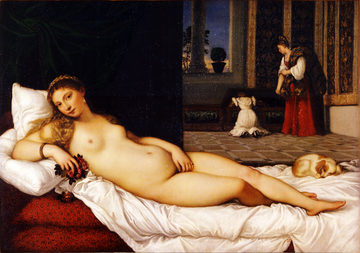
Painted in 1538, this reclining nude revolutionized the genre with its frank sensuality. Unlike idealized classical nudes, Titian's Venus looks directly at the viewer with knowing confidence. She lies on rumpled bed sheets in a contemporary Venetian palace, making the scene immediate and real. The little dog symbolizes fidelity, while servants in the background search a marriage chest. The painting likely celebrates marriage and marital love. Titian's loose brushwork and glowing colors showcase Venetian painting at its peak. The work influenced countless later artists from Velázquez to Manet, who directly referenced it in Olympia.

First Floor, Room D23
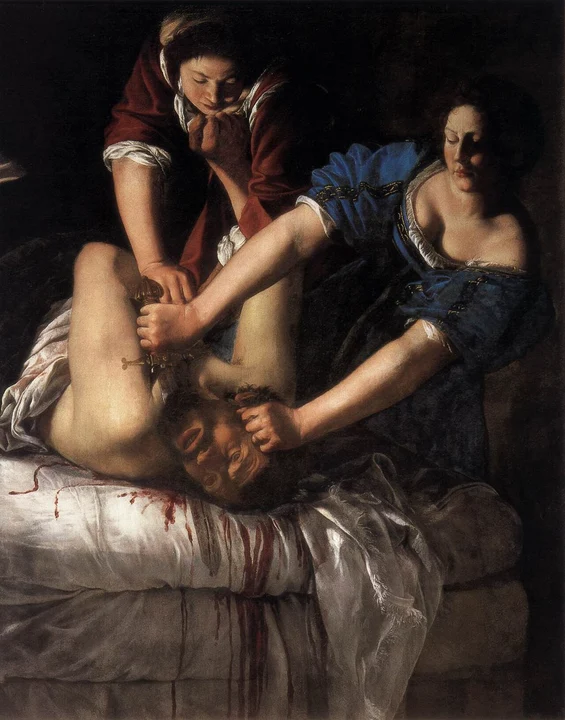
Judith Slaying Holofernes by Artemisia Gentileschi
9

Judith Slaying Holofernes

Artemisia Gentileschi

Painted around 1620, this violent masterpiece depicts the biblical heroine Judith decapitating the Assyrian general Holofernes. Artemisia's version is more brutal and realistic than any male artist's treatment. Blood spurts dramatically as Judith and her maid physically struggle to saw through his neck. Artemisia, who survived sexual assault and a humiliating trial, channeled personal trauma into her art. Her mastery of Caravaggio's dramatic lighting and her unflinching portrayal of female strength made her one of the Baroque's greatest painters. The painting is both revenge fantasy and artistic triumph by one of the few successful female artists in 17th-century Europe.

First Floor, Room E2
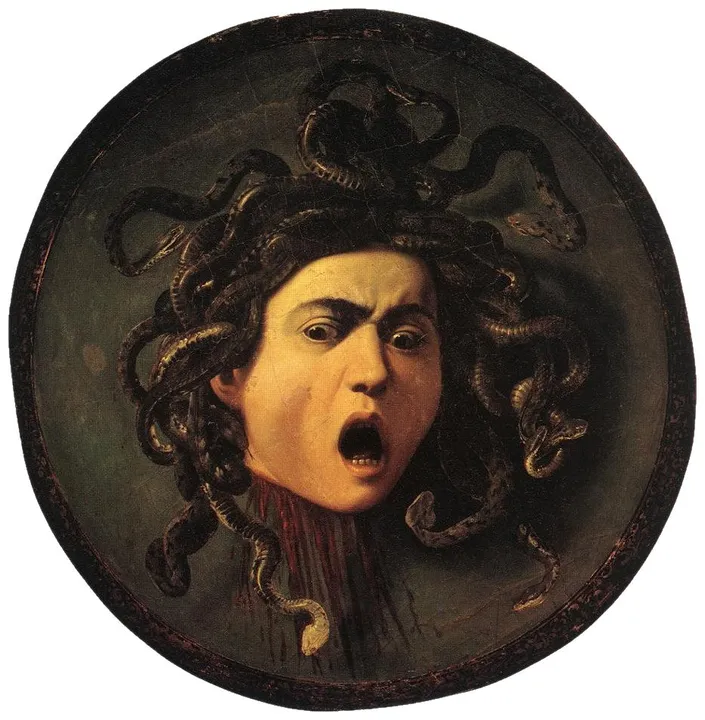
Medusa by Caravaggio
10

Medusa

Caravaggio

Painted around 1597 on a ceremonial shield, this horrifying image captures the moment Medusa sees her own reflection and realizes Perseus has beheaded her. Her mouth opens in a final scream, blood spurts from her neck, and snakes writhe in her hair. Caravaggio used his own face as the model, creating a disturbing self-portrait as monster. The painting demonstrates his revolutionary naturalism and dramatic use of light. Painted on a convex shield, the image seems to project toward the viewer. This virtuoso work showcases Caravaggio's ability to make mythology immediate, visceral, and psychologically complex rather than distant and idealized.

First Floor, Room E4